
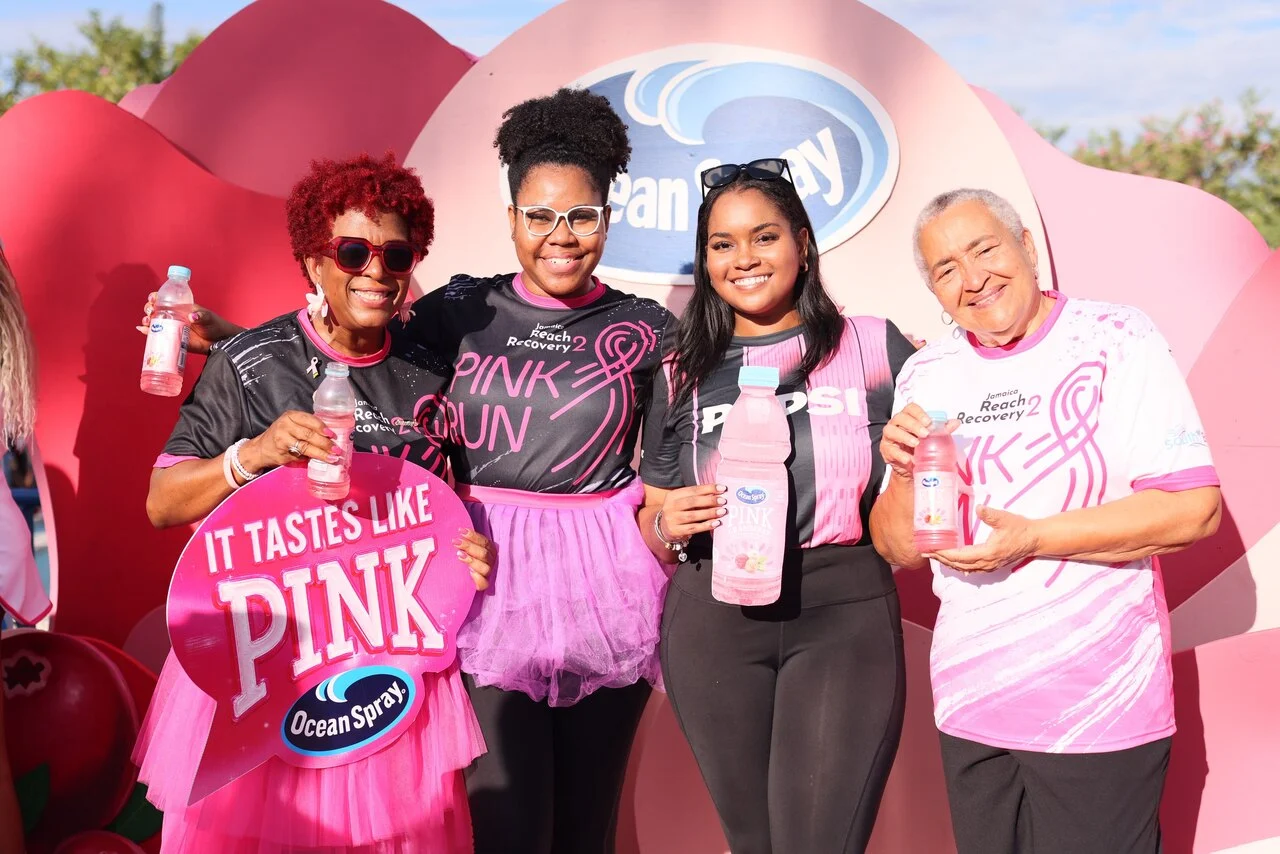
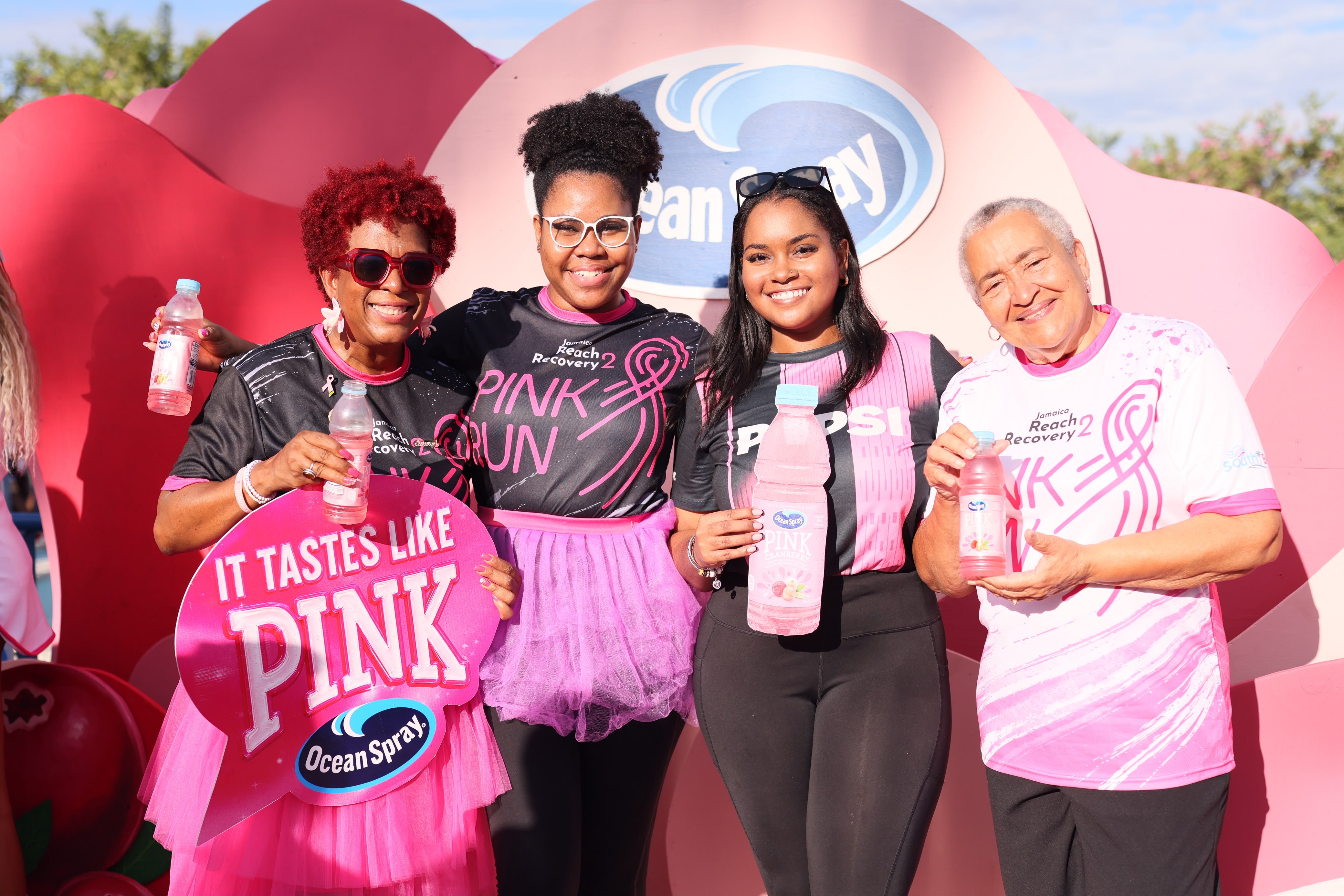
Sandra Samuels, President of Jamaica Reach to Recovery; Mesha-Gaye Ruddock, Vice President of Jamaica Reach to Recovery; Ashli-Raye Recas, Brand Manager of Ocean Spray; and Carolind Graham, Chairman of Jamaica Reach to Recovery, pose with bottles of Ocean Spray Pink at the Ocean Spray activation during the Jamaica Reach to Recovery Pink Run Sunday, October 25. Ocean Spray committed JMD$800,000 toward mammogram machines to support early breast cancer detection in Jamaica.
Every October, Jamaicans pull on pink and take to the road for the women they love. This year, Ocean Spray is making sure the run leaves something lasting behind.
The brand has committed JMD$800,000 toward the purchase of mammogram machines, with beneficiary locations to be selected by the Pink Run Committee. The gift arrives as access to screening across the island continues to decline, with the Jamaica Cancer Society’s own mammogram machine out of service as the month began.
For Ocean Spray, the decision was simple. “Anywhere that Ocean Spray can step in and help, we’re going to be doing that,” said Ashli-Raye Recas, Brand Manager, Ocean Spray and Pepsi. “October is the best time for awareness, and access to screening is on a steady decline. It was important for us to recognise that.”
The commitment is Ocean Spray’s own contribution to a cause the brand says it wants to stand behind long after race day.
“We believe in supporting initiatives that make a meaningful difference,” Ashli-Raye added. “We want to raise awareness and encourage early detection, and Pink Run is a powerful platform to do that. It reaches into Ocean Spray’s support for women’s health.”
The numbers explain the urgency. Jamaica recorded 1,327 new breast cancer cases among women in 2022, about 35 per cent of all cancers in women, according to the Global Cancer Observatory. Roughly 684 women died of the disease in that period. Breast cancer remains the leading cause of cancer death among Jamaican women.
A mammogram is the tool that changes that story. It can reveal cancer before a lump can be felt, and timing makes all the difference: when breast cancer is caught at an early stage, it is among the most curable cancers, with a 10-year survival rate of 98.5 per cent. Yet about four in ten Jamaican women with breast cancer arrive with locally advanced disease, and the country still has no national, organised breast cancer screening programme.
The need is sharpest right now. The Jamaica Cancer Society opened October without a working mammogram machine, forcing hundreds of women to seek screening elsewhere, and a replacement is estimated to cost over JMD$35 million. The Society runs the country’s largest mammography clinic, with as many as 9,000 mammograms done in a year.